It seems there’s enough evidence to prove beyond reasonable doubt that Lucy was being forced to work in the outside nurseries against her will for a period in June 2015.
We have Dr Saladi saying Dr Brearey told him about it (though not the date), testimonies about it from Nurse Calderbank-Ward and Nurse W and texts from Nurse Mel Taylor showing she was involved in it by manipulating Nurses Yvonne Taylor and Yvonne Griffiths in Eirian’s absence.
We also have neonatal unit manager Eirian Powell’s garbled recollection of it, which suggests she was lied to by Nurse W regarding events during her absence.
None of it proves Lucy innocent or guilty, but it is extremely interesting that it seems they were, covertly, deliberately setting Lucy up, either to catch a serial harmer or to invent one.
What evidence did they have to suspect she was harming babies at that point?
You could argue that Mel had actually seen her attack Baby A and wanted to catch her out with the help of Calderbank-Ward (the next night) and of Nurse W (on the Saturday night). It doesn’t sound convincing, though.
Nurse W, in fact, placed what she says she thought to be the sickest baby in the unit that night in the outside nursery, Room 3 …
The plan could be to blame Eirian. They maintain it was an instruction from her, given to help Lucy’s mental wellbeing. But she wasn’t there. Nor was Lucy, most of that week, though somebody thought Lucy was around before Baby C’s air bubble was X-rayed at 12.36 pm on 12th June.
It does make one wonder whether the fuzzy idea of Lucy being “moved to days” some time in early April was the same – something Nurses Yvonne Taylor and Yvonne Griffiths did under guidance from someone else, and Eirian, unsuspecting, just went along with it?… till she couldn’t cope without Lucy on nights, obviously.
Guest post by Dr Gordon Caldwell, Retired Consultant Physician, FRCP, Edinburgh.
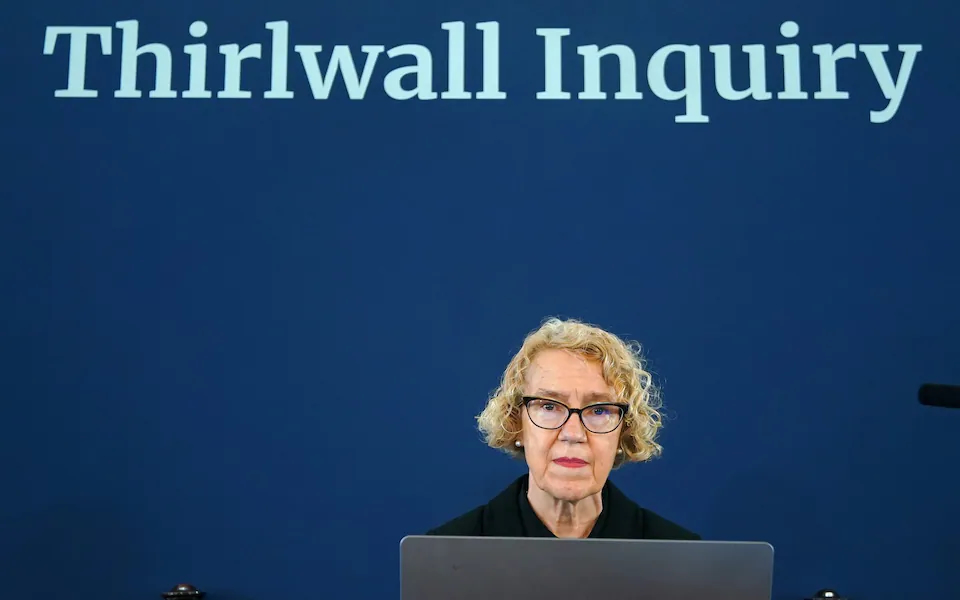
Photo: The Telegraph, 11 November 2025. Credit: Peter Byrne/PA
16 September 2026
Dear Lady Justice Thirlwall,
Response to the Recommendations of the Thirlwall Inquiry
I have read your Recommendations with considerable interest.
Lucy Letby was convicted of murdering seven neonates and attempting to murder seven others. Following such a detailed and costly Inquiry, I had expected the Recommendations to focus explicitly on reducing the risk of another serial killer operating undetected within NHS hospitals. I am concerned that they do not sufficiently address this central issue.
I believe the primary objective should be to reduce both the opportunity for deliberate harm and the time taken to recognise and investigate patterns of suspicious deaths or incidents.
Your statement that “the long-standing underfunding of hospital services for babies and children is well recognised and requires action” is, in my view, particularly important. I return to this issue below, because I believe additional resources should be directed towards strengthening clinical supervision, communication and professional relationships.
I comment briefly on each Recommendation.
1. CCTV and monitoring
You propose enabling parents to view their baby through a live video stream. Unless the footage is recorded and retained for a sufficiently long period, it would not provide evidence of the quality of care or deliberate harm. I therefore question the practical benefit of CotCams.
There is also a risk of placing an additional burden on parents who are already under considerable emotional and physical strain: “Should I be watching my baby rather than getting some sleep?”
2. Insulin
I presume the objective is to prevent unauthorised access to insulin. Restricting access to ward refrigerators, however, would not prevent a determined and resourceful individual from obtaining insulin elsewhere within or outside a hospital.
I accept that digital access controls could make legitimate access quicker for nurses and more auditable. More importantly, your recommendation concerning the management of hypoglycaemia could improve the quality of evidence for exogenous insulin administration. The key question is how compliance with this process would be ensured and audited.
I am also concerned about the proposed 28-day retention period for CCTV. Letby was not suspected for many months. CCTV retained for only 28 days would therefore be unlikely to assist in retrospectively establishing what occurred.
3. Bereavement care
This is a worthwhile objective, but it would not reduce the risk of deliberate harm or improve its early detection.
4. Safeguarding and contracts of employment
This appears to place considerable emphasis on employment consequences when concerns are raised or not raised. I question how this would deter a prospective murderer, particularly one who is deliberately attempting to deceive colleagues.
5. Operating systems and interoperability
Improved interoperability is desirable but appears difficult to achieve within the proposed timeframe and, by itself, would not prevent deliberate harm.
6. Monitoring hospital deaths
Real-time monitoring of mortality should arguably have been established much earlier. However, considerable care will be required in interpreting statistical signals.
What constitutes a significant spike? Should organisations use run charts, twostandard-deviation limits or three-standard-deviation limits? How should differences in unit size be accommodated? A murderer might cause four additional deaths in a large unit without producing an obvious statistical signal, whereas a single additional death in a very small unit might produce a substantial apparent spike.
These methodological issues require explicit consideration if mortality surveillance is to identify genuine abnormalities without generating excessive false alarms.
7. Data reporting
Improved data reporting is clearly desirable, but it does not in itself prevent a serial killer from harming patients.
8. Sudden Unexpected Death in Infancy and Childhood
I strongly support this Recommendation. It is, however, concerning that such events were not already consistently captured within the Datix system.
I also support simplifying NHS reporting forms so that they concentrate on the information that is genuinely essential.
9. Suspicion of deliberate harm and guidance
This is perhaps the area where I have the greatest concerns.
Deliberate harm by NHS staff is extremely rare, while individuals who repeatedly harm others may be exceptionally deceptive. The cases of Harold Shipman and Jimmy Savile demonstrate how long highly manipulative individuals can deceive colleagues and the wider public.
It is therefore unrealistic to expect ordinary NHS staff to identify such individuals reliably without a strong organisational culture that encourages challenge and discussion.
Several practical questions arise:
How is a manager to determine whether a concern has been raised “in good faith” rather than “maliciously or irrationally”?
Once a concern is considered credible, what threshold should apply before suspension or removal from clinical duties?
Who should investigate the concern, and with what independence and expertise?
How would the process prevent the inappropriate movement or suspension of staff?
What protection is available to staff who are wrongly accused?
How many concerns are expected to be raised, and how will the consequences for staff and service delivery be monitored?
Recommendation 9(iii) should, in my view, require systematic audit. This should include the number of concerns raised, the proportion considered to be in good faith, the proportion found to be unfounded or malicious, the action taken, and the consequences for both individuals and patient services.
The process should also be designed to recognise excellence. I would recommend an accompanying system of Excellence Reports and Awards, enabling outstanding staff to be recognised and helping to create a balanced culture in which staff are not known only for concerns raised about them.
10. Healthcare incident investigation
The NHS already has the Healthcare Safety Investigation Branch (HSSIB), established following the work of Sir Jeremy Hunt, with Keith Conradi, formerly of the UK Air Accidents Investigation Branch, as its first CEO.
I would welcome clarification on how the proposed arrangements differ from HSSIB.
I would favour a system in which each major area of medicine has an appropriately experienced clinical lead who can assemble an investigation team according to the circumstances of the incident. Different clinical incidents require different expertise. An investigation into the failure of an old WW1 biplane aircraft, for example, requires different expertise from an investigation into a collision between two large passenger aircraft.
A similarly flexible approach within healthcare could ensure that the appropriate experts are brought in at an early stage, including where deliberate harm is a possibility.
11. Medical Examiners
A similar system already operates in Scotland. In my experience, medical examiners can provide a valuable additional level of scrutiny of death certification.
I suggest that the process should explicitly include the question: “Is there any suspicion or possibility of deliberate harm or foul play?”
There should also be clearer guidance for doctors completing death certificates about circumstances in which a death must first be discussed with the Coroner. Once a certificate has been issued, it can be difficult to interrupt the subsequent arrangements for a funeral.
12. Paediatric and perinatal pathology
I support measures to encourage doctors to specialise in paediatric and perinatal pathology. However, the Inquiry should also consider whether there were deficiencies in the training, systems or professional support available to the pathologists involved in the Letby cases, and what lessons should be learned from this. How did the highly experienced pathologists overlook murders?
13. Accountability and regulation of managers
Greater accountability is desirable but is unlikely to be straightforward.
If managers are to become a regulated profession, this may require consideration of minimum qualifications, a statutory or professional framework, registration and an independent authority with appropriate powers. This appears to require substantially more detailed consideration than a Recommendation alone.
14. Care Quality Commission
I agree with your criticisms of the CQC and support measures to improve its performance. However, I do not see how these measures, by themselves, would prevent or facilitate earlier detection of a serial killer.
14. Care Quality Commission
I agree with your criticisms of the CQC and support measures to improve its performance. However, I do not see how these measures, by themselves, would prevent or facilitate earlier detection of a serial killer.
15.
See comments above.
16. Health Service Ombudsman
Experience to date gives little reassurance that existing mechanisms have adequately protected NHS whistleblowers. This requires further consideration if staff are genuinely to feel safe raising concerns.
16. Health Service Ombudsman
Experience to date gives little reassurance that existing mechanisms have adequately protected NHS whistleblowers. This requires further consideration if staff are genuinely to feel safe raising concerns.
17. Future inquiries
I strongly agree that there have been too many inquiries without sufficiently effective implementation of their recommendations. The effectiveness of inquiries and their recommendations should itself be subject to independent review.
Recommendations I believe would reduce the risk of deliberate harm
If I were the parent of a child who had died at the hands of a serial killer in an NHS hospital, I would want reassurance that the lessons from the Inquiry had resulted in fundamental changes to the way clinical teams work together and identify concerns.
I would therefore recommend the following:
1. Restore adequate clinical staffing and supervision
Ward Sisters and Consultants need sufficient protected time to observe, support, supervise, assess and train nurses and junior doctors in the workplace. Ward Sisters should be supernumerary to the numbers of staff required to attend to the patients. Consultants should be able to run unhurried Ward Rounds and to be able to work through each new case with the Junior Doctor.
Ward Sisters should not routinely be burdened with their own patient caseload or excessive administration. They need to be present on the ward, know their staff and students, understand their capabilities and recognise when additional training or supervision is required.
Consultants require similar opportunities to know their teams and observe clinical practice.
This would also enable senior clinicians to recognise and record excellence as well as identify staff requiring additional support or training.
The additional funding identified in your Recommendation concerning paediatric services could be directed towards this purpose.
2. Regular meetings of senior unit staff
There should be regular, preferably monthly, meetings involving Unit Consultants, Ward Sisters and Managers, with minutes and clear follow-up of agreed actions.
In my experience, such meetings are now less common than they should be. Regular multidisciplinary discussion would strengthen trust, communication and shared responsibility.
3. Reinstate regular Morbidity and Mortality Meetings
Regular Morbidity and Mortality Meetings were once an ordinary part of clinical practice but have diminished under pressure to meet performance targets.
These meetings should provide a psychologically safe environment in which deaths, unexpected events and patient harm can be discussed openly. They should be multidisciplinary and attended by clinical leaders and senior managers.
A structured checklist should include the question:
“Is there any possibility of deliberate harm or foul play?”
4. Reinstate Grand Rounds
Grand Rounds should be reinstated, with meetings chaired by the Medical Director.
Difficult cases and cases with important lessons should be presented and discussed openly by clinicians. This would demonstrate that the Medical Director places patient care and safety at the centre of the organisation and that honest discussion and professional challenge are encouraged.
5. Simplify Datix reporting
Datix reporting should be made substantially simpler.
The current forms can be burdensome and may discourage reporting. In Calgary, I understand that reporting operated effectively using two initial questions:
“Who are you?” “What happened?”
Experts could then determine whether further investigation was warranted.
A similarly simple initial reporting process could encourage staff to report both adverse events and suspicious incidents.
6. Introduce Excellence Reports and Awards
I recommend establishing Excellence Incident Reports and Awards, following the approach used in the Papworth Cardiothoracic Unit.
Recognising excellent clinical practice would demonstrate what good performance looks like, strengthen morale and provide balance to a system necessarily concerned with identifying failures and concerns. It could also provide some protection against unfair or malicious allegations.
Conclusion
No system can completely protect patients from a determined and deceptive serial killer. However, an organisation in which staff know one another, communicate openly, challenge concerns and regularly review unexpected deaths is more likely to identify abnormal patterns at an early stage.
The recommendations I have outlined are intended to strengthen trust, professional relationships, clinical supervision, openness and collective responsibility within NHS hospitals.
I believe these are important lessons from the Letby case that deserve greater emphasis in the implementation of the Thirlwall Inquiry’s Recommendations.
Yours sincerely,
Dr Gordon Caldwell
Retired Consultant Physician, FRCP, Edinburgh.
Email: drgordon.caldwell@gmail.com
Postscript by R D Gill
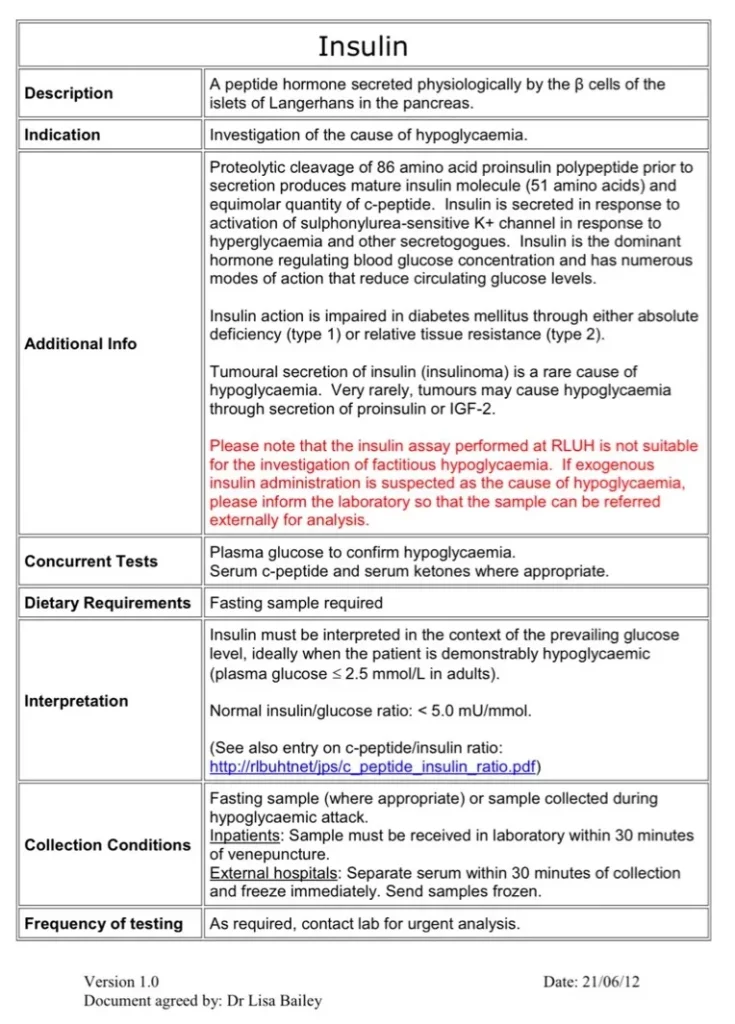
I would like to add one further remark on Lady Thirlwall’s recommendations concerning insulin. She writes The GIRFT Laboratory Handling of Insulin Requests in the Investigation of Hypoglycaemia guidance for the testing and reporting of insulin and C-peptide results, issued in October 2025, must be made mandatory and of national application. That document https://www.ibms.org/resource/laboratory-handling-of-insulin-requests-in-the-investigation-of-hypoglycaemia-guidelines.html recommends against offering more expensive and powerful LC-MS/MS testing as an alternative to “cheap and nasty” immunoassay because doctors would only get confused when they get different results from different assays.
GIRFT stand for “Getting It Right First Time”. Thirlwall prefers to get it wrong first anyway, and certainly do not suggest that it might be done better.
Insulin assay instructions, Royal Liverpool University Hospital laboratory.
Re: “The very intimate friendship between Lucy Letby and her married doctor ‘boyfriend’ “
“Special report by Liz Hull”
Note by Richard Gill: This is a guest post by a correspondent. More information about the author below. First, the text of her actual letterof complaint, sent a few days ago to the Daily Mail and to IPSO (the UK’s independent press regulator).
I found this article profoundly disturbing because it is not simply reporting a new disciplinary development. It takes a deeply contested criminal case, in which serious questions have been raised about the safety of Lucy Letby’s convictions, and presents the prosecution’s interpretation of the evidence as though it were established fact.
That is a very serious problem.
The article repeatedly refers to Dr A as Lucy Letby’s “boyfriend”, describes Baby N as “a baby she tried to kill”, and states that Dr A was “another victim of Lucy Letby”.
Yet the article itself acknowledges that the cause of Dr A’s death is currently unknown.
There is therefore no evidential basis presented for suggesting that Dr A was a “victim” of Lucy Letby, let alone that she had anything to do with his death. This is sensationalist speculation masquerading as reporting.
More importantly, the article fails to engage properly with the significance of Dr A’s own evidence.
At the Thirlwall Inquiry, Dr A acknowledged that he had shared too much information with Lucy and that some of his conduct had been inappropriate. But he also explained that he believed he was supporting a colleague whom he understood to be distressed and worried.
The crucial issue is not simply whether Dr A breached confidentiality.
[BTW,in my opinion, this was no breach of confidentiality. The information did not get out of the hospital. Dr A and Lucy Letby were colleagues, both involved in the treatment of this patient – RDG]
It is what his evidence tells us about the reliability of the prosecution narrative concerning Lucy’s relationship with him and the interpretation placed upon their communications.
The prosecution relied heavily upon the proposition that Lucy was infatuated with Dr A and that she deliberately created crises involving babies in order to attract his attention.
That proposition was not an established fact. It was an interpretation of circumstantial evidence.
And the subsequent evidence deserves serious scrutiny.
Dr A himself was actively communicating with Lucy, providing her with information and reassurance, forwarding confidential material and maintaining a close friendship with her. He later acknowledged that he had “shared too much” and that he had been “misled and maybe manipulated”.
That raises an obvious question which today’s Mail article largely avoids:
If Dr A was himself supplying Lucy with information and interpreting her behaviour incorrectly at the time, how reliable are the retrospective interpretations of those communications that were used to support the prosecution’s case?
The article also reproduces a contemporaneous WhatsApp exchange in which Lucy, immediately after Dr A first contacted her, told a friend:
“Shut up! I don’t flirt with him! Certainly, don’t fancy him ha ha just nice guy.”
That does not settle the nature of their relationship, but it is contemporaneous evidence which potentially conflicts with the prosecution’s portrayal of Lucy as being deeply infatuated with him.
Instead of examining that conflict, the article selectively emphasises the love hearts, searches for his wife, late-night messages and trips together, thereby reinforcing the prosecution narrative.
This is particularly troubling because there are now substantial and continuing questions about the safety of Lucy Letby’s convictions.
The Thirlwall Inquiry has heard evidence challenging aspects of the original prosecution narrative. Independent experts have questioned whether some of the babies’ collapses and deaths were necessarily caused by deliberate harm. The CCRC is examining the case and expert evidence. The point is not that every challenge to the convictions is necessarily correct; the point is that this is not a case in which every currently disputed proposition should simply be presented as settled fact.
Today’s article does precisely that.
It takes a disciplinary investigation into Dr A’s own conduct and uses it to reinforce the proposition that Lucy attacked Baby N and that Dr A was somehow a victim of her.
But a disciplinary finding against Dr A does not independently establish Lucy’s guilt.
Indeed, if anything, the fact that Dr A was subsequently investigated over his own handling of confidential information makes it more important, not less important, to scrutinise the prosecution’s interpretation of the communications between them.
The Mail also needs to be transparent about what it actually knows concerning the disciplinary proceedings.
If the newspaper has obtained the disciplinary findings, then publish or accurately describe the findings themselves. Tell readers precisely what was proved, what was alleged, and what the dismissal was actually based upon.
Do not simply present anonymous descriptions of the proceedings alongside the established fact of Lucy Letby’s conviction and allow readers to assume that the two independently corroborate one another.
Finally, I strongly object to the statement that Dr A was “another victim of Lucy Letby”.
That is not an established fact.
His cause of death is not yet known.
The coroner is investigating.
A newspaper can report the tragic chronology without turning it into a narrative of causation for which there is currently no evidence.
I appreciate that the Daily Mail has a right to express a view about Lucy Letby’s guilt. However, there is a profound difference between reporting a conviction and presenting every disputed element of the prosecution case as though it has subsequently been independently validated.
There is a very real and continuing public debate about whether Lucy Letby’s convictions are safe. If this is a miscarriage of justice, then reporting of this kind risks reinforcing the very narrative that needs to be examined.
At the very least, readers deserve to know where established evidence ends and the newspaper’s interpretation begins.
I therefore ask the Daily Mail to provide a substantive response addressing the evidential basis for the following:
The description of Dr A as Lucy Letby’s “boyfriend”.
The assertion that Dr A was “another victim of Lucy Letby”.
The implication that his death may be connected to Lucy Letby.
The precise findings of the disciplinary proceedings.
The extent to which those findings actually concern the evidence relied upon at Lucy Letby’s criminal trial.
And why the article gives such prominence to the prosecution’s interpretation of the relationship while failing to acknowledge the legitimate questions now being raised about that interpretation.
This is not about asking the Daily Mail to support Lucy Letby.
It is about asking a national newspaper to report a highly contentious case fairly, particularly when a potential miscarriage of justice is precisely what is now being investigated.
Yours faithfully,
Karen Montanaro
From here on, the text is by Richard Gill.
My guest Karen is an assistant and language tutor from Lancashire who has followed the Lucy Letby case closely and has become increasingly concerned about the way disputed evidence and allegations are presented as established fact in the media. Like me, she is simply a member of the public who believes the case deserves careful and fair scrutiny.
Her letter was sent to the Daily Mail soon after the publication (Saturday, 15 August 2026) of Liz Hull’s article in the Daily Mail in reaction to the death of Dr. A. It has also been sent to IPSO, the independent regulator for the UK digital and print news industry.
It has taken me a bit too long to publish here – I was somewhat overwhelmed by the suicide of Jason Arday—another person persecuted by the press.
Liz Hull’s article begins in her own inimitable style as follows:
June 24 is a date of morbid significance in the timeline of baby killer Lucy Letby’s crimes. It was on that day, in 2016, that the former neonatal nurse murdered the last of her victims. The second brother of premature triplets – she killed two of the siblings by injecting air into their tiny bodies – the child, known as Baby P in court, was the seventh infant to die at her hands. Exactly ten years on, that anniversary has become even more loaded for Letby. For it will now also mark the day that her ‘boyfriend’ – a married doctor with whom, her trial heard, she was so infatuated that she deliberately killed and harmed babies to get his attention – was found mysteriously collapsed in his car by police officers.
By the way, it is now seems clear that the complaint against Dr A was actually raised by – wait for it – the mother of Baby N. And I suspect that Cheshire Constabulary and/or the local branch of the CPS had a hand in this, too. [May God forgive her, for she knows not what she is doing, and has just been another pawn in the game of Doctors Brearey and Jayaram.]
Karen and I are deeply sorry for the family of Dr A. We hope that they too – like the parents of the babies Lucy Letby is alleged to have harmed or even killed – will at some time be able to accept the truth of Lucy Letby’s innocence and the shocking truth about the state of the Maternity Unit at the Countess of Chester Hospital.
Here is the complete text to the Daily Mail article, it is no longer behind a paywall, so I suppose this is allowed.
Lucy Letby’s ‘boyfriend’ died after being sacked for exchanging messages with the convicted serial killer about a baby she tried to murder, the Daily Mail can reveal.
The 53-year-old consultant doctor – who cannot be named for legal reasons – was found collapsed in his car the day after he was dismissed from the NHS hospital where he worked.
He was admitted to intensive care but died nine days later, on July 3. An inquest is due to open into his death at a date to be fixed.
The doctor was hauled before a disciplinary hearing in June over a series of inappropriate texts he sent the former neo-natal nurse while they worked together at the Countess of Chester Hospital, the Daily Mail has learned.
The messages, understood to have breached patient confidentiality, involved details of the care of a premature baby boy with haemophilia, known only as Baby N, who Letby, 36, was convicted of trying to kill the day after he was born in June 2016.
It is understood that the doctor also faced other serious allegations, including that he inappropriately accessed medical records and risked patient safety, which cannot be revealed for legal reasons.
At her trial, Letby was forced to deny she and the medic, referred to as ‘Dr A’, were having a romantic affair and claimed they were just ‘best friends’.
But she broke down in tears and tried to leave the dock when he entered the courtroom at Manchester Crown Court to give evidence.
She called him ‘sweetie’ in texts and referred to him as ‘love’ in notes scrawled with his name and love hearts that police discovered during searches at her home.
Letby is serving a record 15 whole-life terms after being found guilty of murdering seven babies and attempting to murder seven more – one of whom she attacked twice – at the Countess of Chester Hospital between June 2015 and June 2016.
Sources told the Daily Mail that Dr A attended a three-day disciplinary hearing in early June this year and was fired for gross misconduct a fortnight later, on June 23.
The following day relatives reported him missing and he was later found collapsed in his car at a retail park, around 20 miles from his Cheshire home.
He was admitted to intensive care but never regained consciousness, and died on July 3 at Whiston Hospital, Merseyside.
The cause of his death is not yet known but has been referred to the Cheshire Coroner, who confirmed ‘preliminary inquiries’ had begun.
His NHS bosses would have been duty bound to report his dismissal to the doctors’ regulatory body, the General Medical Council, potentially threatening his professional registration and ability to work as a medic again.
Dr A told the Thirlwall Inquiry – the public inquiry investigating Letby’s crimes – in October 2024 that the Band 5 nurse ‘misled and maybe manipulated’ him into giving her information about babies she had attacked.
The then-junior doctor swapped 1,355 Facebook messages with Letby, discussing babies who collapsed when they were on shift together, over a three-month period, between June 2016 and September 2016.
The pair also exchanged more flirty messages about their private lives, sometimes late at night, met up for walks and meals and went on day trips to London together in their free time away from work.
In one message Letby asked Dr A about the condition of Baby N and queried whether she had done anything wrong concerning his care.
Dr A messaged back: ‘Oh Lucy, poor little thing. I am sure he has had the best care possible and you will have done everything you could for him.’
Asked by counsel for the inquiry, Rachel Langdale KC, whether such a message was appropriate, Dr A replied: ‘In hindsight, no. Looking at the content of the messages here, I’ve shared too much.’
In her evidence to the inquiry, which was overseen by High Court judge Lady Justice Thirlwall and is set to report later this year, Baby N’s mother accused Dr A of ‘blatantly’ breaching her son’s patient confidentiality.
She also revealed she had lodged a formal complaint with the hospital where he went on to work about his conduct.
Letby, formerly of Hereford, was convicted at Manchester Crown Court in August 2023 after the longest running murder trial in British history.
She has always maintained she did not kill or harm any babies in her care.
Letby has twice applied and been denied the right to appeal, but has lodged documents with the Criminal Cases Review Commission, the body which investigates potential miscarriages of justice, in a bid to secure her freedom.