Guest post by Dr Gordon Caldwell, Retired Consultant Physician, FRCP, Edinburgh.
16 September 2026
Dear Lady Justice Thirlwall,
Response to the Recommendations of the Thirlwall Inquiry
I have read your Recommendations with considerable interest.
Lucy Letby was convicted of murdering seven neonates and attempting to murder seven others. Following such a detailed and costly Inquiry, I had expected the Recommendations to focus explicitly on reducing the risk of another serial killer operating undetected within NHS hospitals. I am concerned that they do not sufficiently address this central issue.
I believe the primary objective should be to reduce both the opportunity for deliberate harm and the time taken to recognise and investigate patterns of suspicious deaths or incidents.
Your statement that “the long-standing underfunding of hospital services for babies and children is well recognised and requires action” is, in my view, particularly important. I return to this issue below, because I believe additional resources should be directed towards strengthening clinical supervision, communication and professional relationships.
I comment briefly on each Recommendation.
1. CCTV and monitoring
You propose enabling parents to view their baby through a live video stream. Unless the footage is recorded and retained for a sufficiently long period, it would not provide evidence of the quality of care or deliberate harm. I therefore question the practical benefit of CotCams.
There is also a risk of placing an additional burden on parents who are already under considerable emotional and physical strain: “Should I be watching my baby rather than getting some sleep?”
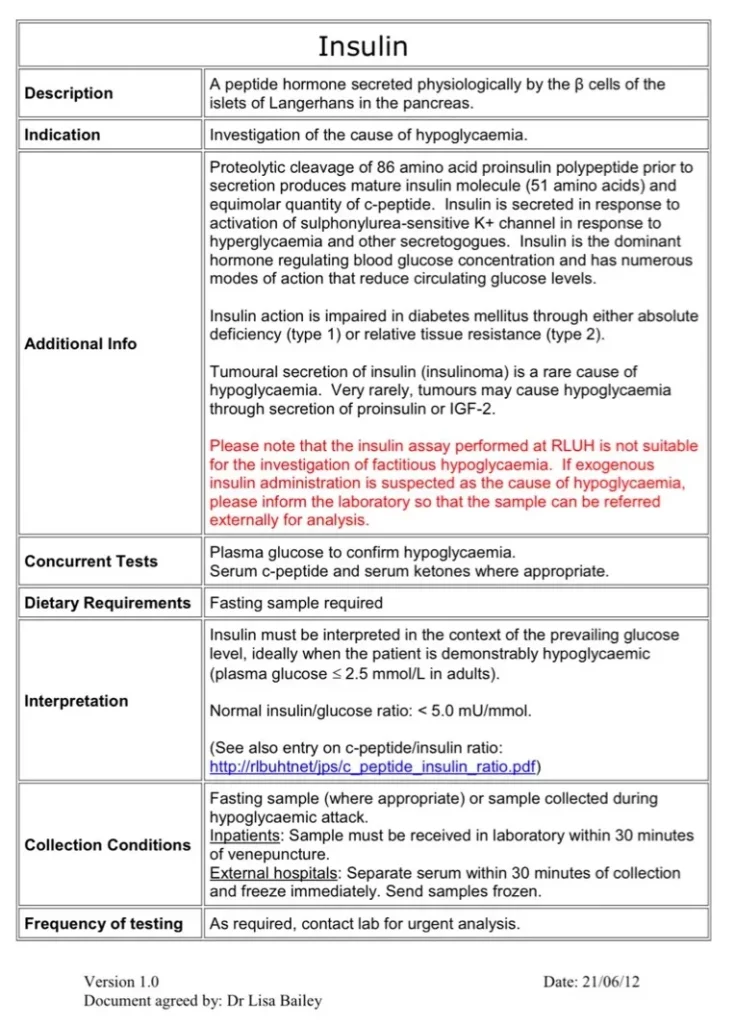
2. Insulin
I presume the objective is to prevent unauthorised access to insulin. Restricting access to ward refrigerators, however, would not prevent a determined and resourceful individual from obtaining insulin elsewhere within or outside a hospital.
I accept that digital access controls could make legitimate access quicker for nurses and more auditable. More importantly, your recommendation concerning the management of hypoglycaemia could improve the quality of evidence for exogenous insulin administration. The key question is how compliance with this process would be ensured and audited.
I am also concerned about the proposed 28-day retention period for CCTV. Letby was not suspected for many months. CCTV retained for only 28 days would therefore be unlikely to assist in retrospectively establishing what occurred.
3. Bereavement care
This is a worthwhile objective, but it would not reduce the risk of deliberate harm or improve its early detection.
4. Safeguarding and contracts of employment
This appears to place considerable emphasis on employment consequences when concerns are raised or not raised. I question how this would deter a prospective murderer, particularly one who is deliberately attempting to deceive colleagues.
5. Operating systems and interoperability
Improved interoperability is desirable but appears difficult to achieve within the proposed timeframe and, by itself, would not prevent deliberate harm.
6. Monitoring hospital deaths
Real-time monitoring of mortality should arguably have been established much earlier. However, considerable care will be required in interpreting statistical signals.
What constitutes a significant spike? Should organisations use run charts, twostandard-deviation limits or three-standard-deviation limits? How should differences in unit size be accommodated? A murderer might cause four additional deaths in a large unit without producing an obvious statistical signal, whereas a single additional death in a very small unit might produce a substantial apparent spike.
These methodological issues require explicit consideration if mortality surveillance is to identify genuine abnormalities without generating excessive false alarms.
7. Data reporting
Improved data reporting is clearly desirable, but it does not in itself prevent a serial killer from harming patients.
8. Sudden Unexpected Death in Infancy and Childhood
I strongly support this Recommendation. It is, however, concerning that such events were not already consistently captured within the Datix system.
I also support simplifying NHS reporting forms so that they concentrate on the information that is genuinely essential.
9. Suspicion of deliberate harm and guidance
This is perhaps the area where I have the greatest concerns.
Deliberate harm by NHS staff is extremely rare, while individuals who repeatedly harm others may be exceptionally deceptive. The cases of Harold Shipman and Jimmy Savile demonstrate how long highly manipulative individuals can deceive colleagues and the wider public.
It is therefore unrealistic to expect ordinary NHS staff to identify such individuals reliably without a strong organisational culture that encourages challenge and discussion.
Several practical questions arise:
- How is a manager to determine whether a concern has been raised “in good faith” rather than “maliciously or irrationally”?
- Once a concern is considered credible, what threshold should apply before suspension or removal from clinical duties?
- Who should investigate the concern, and with what independence and expertise?
- How would the process prevent the inappropriate movement or suspension of staff?
- What protection is available to staff who are wrongly accused?
- How many concerns are expected to be raised, and how will the consequences for staff and service delivery be monitored?
Recommendation 9(iii) should, in my view, require systematic audit. This should include the number of concerns raised, the proportion considered to be in good faith, the proportion found to be unfounded or malicious, the action taken, and the consequences for both individuals and patient services.
The process should also be designed to recognise excellence. I would recommend an accompanying system of Excellence Reports and Awards, enabling outstanding staff to be recognised and helping to create a balanced culture in which staff are not known only for concerns raised about them.
10. Healthcare incident investigation
The NHS already has the Healthcare Safety Investigation Branch (HSSIB), established following the work of Sir Jeremy Hunt, with Keith Conradi, formerly of the UK Air Accidents Investigation Branch, as its first CEO.
I would welcome clarification on how the proposed arrangements differ from HSSIB.
I would favour a system in which each major area of medicine has an appropriately experienced clinical lead who can assemble an investigation team according to the circumstances of the incident. Different clinical incidents require different expertise. An investigation into the failure of an old WW1 biplane aircraft, for example, requires different expertise from an investigation into a collision between two large passenger aircraft.
A similarly flexible approach within healthcare could ensure that the appropriate experts are brought in at an early stage, including where deliberate harm is a possibility.
11. Medical Examiners
A similar system already operates in Scotland. In my experience, medical examiners can provide a valuable additional level of scrutiny of death certification.
I suggest that the process should explicitly include the question: “Is there any suspicion or possibility of deliberate harm or foul play?”
There should also be clearer guidance for doctors completing death certificates about circumstances in which a death must first be discussed with the Coroner. Once a certificate has been issued, it can be difficult to interrupt the subsequent arrangements for a funeral.
12. Paediatric and perinatal pathology
I support measures to encourage doctors to specialise in paediatric and perinatal pathology. However, the Inquiry should also consider whether there were deficiencies in the training, systems or professional support available to the pathologists involved in the Letby cases, and what lessons should be learned from this. How did the highly experienced pathologists overlook murders?
13. Accountability and regulation of managers
Greater accountability is desirable but is unlikely to be straightforward.
If managers are to become a regulated profession, this may require consideration of minimum qualifications, a statutory or professional framework, registration and an independent authority with appropriate powers. This appears to require substantially more detailed consideration than a Recommendation alone.
14. Care Quality Commission
I agree with your criticisms of the CQC and support measures to improve its performance. However, I do not see how these measures, by themselves, would prevent or facilitate earlier detection of a serial killer.
14. Care Quality Commission
I agree with your criticisms of the CQC and support measures to improve its performance. However, I do not see how these measures, by themselves, would prevent or facilitate earlier detection of a serial killer.
15.
See comments above.
16. Health Service Ombudsman
Experience to date gives little reassurance that existing mechanisms have adequately protected NHS whistleblowers. This requires further consideration if staff are genuinely to feel safe raising concerns.
16. Health Service Ombudsman
Experience to date gives little reassurance that existing mechanisms have adequately protected NHS whistleblowers. This requires further consideration if staff are genuinely to feel safe raising concerns.
17. Future inquiries
I strongly agree that there have been too many inquiries without sufficiently effective implementation of their recommendations. The effectiveness of inquiries and their recommendations should itself be subject to independent review.
Recommendations I believe would reduce the risk of deliberate harm
If I were the parent of a child who had died at the hands of a serial killer in an NHS hospital, I would want reassurance that the lessons from the Inquiry had resulted in fundamental changes to the way clinical teams work together and identify concerns.
I would therefore recommend the following:
1. Restore adequate clinical staffing and supervision
Ward Sisters and Consultants need sufficient protected time to observe, support, supervise, assess and train nurses and junior doctors in the workplace. Ward Sisters should be supernumerary to the numbers of staff required to attend to the patients. Consultants should be able to run unhurried Ward Rounds and to be able to work through each new case with the Junior Doctor.
Ward Sisters should not routinely be burdened with their own patient caseload or excessive administration. They need to be present on the ward, know their staff and students, understand their capabilities and recognise when additional training or supervision is required.
Consultants require similar opportunities to know their teams and observe clinical practice.
This would also enable senior clinicians to recognise and record excellence as well as identify staff requiring additional support or training.
The additional funding identified in your Recommendation concerning paediatric services could be directed towards this purpose.
2. Regular meetings of senior unit staff
There should be regular, preferably monthly, meetings involving Unit Consultants, Ward Sisters and Managers, with minutes and clear follow-up of agreed actions.
In my experience, such meetings are now less common than they should be. Regular multidisciplinary discussion would strengthen trust, communication and shared responsibility.
3. Reinstate regular Morbidity and Mortality Meetings
Regular Morbidity and Mortality Meetings were once an ordinary part of clinical practice but have diminished under pressure to meet performance targets.
These meetings should provide a psychologically safe environment in which deaths, unexpected events and patient harm can be discussed openly. They should be multidisciplinary and attended by clinical leaders and senior managers.
A structured checklist should include the question:
“Is there any possibility of deliberate harm or foul play?”
4. Reinstate Grand Rounds
Grand Rounds should be reinstated, with meetings chaired by the Medical Director.
Difficult cases and cases with important lessons should be presented and discussed openly by clinicians. This would demonstrate that the Medical Director places patient care and safety at the centre of the organisation and that honest discussion and professional challenge are encouraged.
5. Simplify Datix reporting
Datix reporting should be made substantially simpler.
The current forms can be burdensome and may discourage reporting. In Calgary, I understand that reporting operated effectively using two initial questions:
“Who are you?” “What happened?”
Experts could then determine whether further investigation was warranted.
A similarly simple initial reporting process could encourage staff to report both adverse events and suspicious incidents.
6. Introduce Excellence Reports and Awards
I recommend establishing Excellence Incident Reports and Awards, following the approach used in the Papworth Cardiothoracic Unit.
Recognising excellent clinical practice would demonstrate what good performance looks like, strengthen morale and provide balance to a system necessarily concerned with identifying failures and concerns. It could also provide some protection against unfair or malicious allegations.
Conclusion
No system can completely protect patients from a determined and deceptive serial killer. However, an organisation in which staff know one another, communicate openly, challenge concerns and regularly review unexpected deaths is more likely to identify abnormal patterns at an early stage.
The recommendations I have outlined are intended to strengthen trust, professional relationships, clinical supervision, openness and collective responsibility within NHS hospitals.
I believe these are important lessons from the Letby case that deserve greater emphasis in the implementation of the Thirlwall Inquiry’s Recommendations.
Yours sincerely,
Dr Gordon Caldwell
Retired Consultant Physician, FRCP, Edinburgh.
Email: drgordon.caldwell@gmail.com
Postscript by R D Gill
I would like to add one further remark on Lady Thirlwall’s recommendations concerning insulin. She writes The GIRFT Laboratory Handling of Insulin Requests in the Investigation of Hypoglycaemia guidance for the testing and reporting of insulin and C-peptide results, issued in October 2025, must be made mandatory and of national application. That document https://www.ibms.org/resource/laboratory-handling-of-insulin-requests-in-the-investigation-of-hypoglycaemia-guidelines.html recommends against offering more expensive and powerful LC-MS/MS testing as an alternative to “cheap and nasty” immunoassay because doctors would only get confused when they get different results from different assays.
GIRFT stand for “Getting It Right First Time”. Thirlwall prefers to get it wrong first anyway, and certainly do not suggest that it might be done better.